As Above, So Below: The Quiet Instruction Almost Nobody Quotes
Watch the video: https://www.youtube.com/watch?v=VThnuNokPCY
Free guide 04, The Quiet Instruction (PDF, by email): https://bjj-yoga.com/the-slow-initiation/?guide=04
You have seen this sentence on tattoos, on book covers, on rings, on posters. As above, so below. Almost everyone who repeats it has never read the text it comes from. That text is short. You can read it in two minutes. And the most important line in it is not the famous one.
It is a quiet instruction about how fast to go. And almost nobody quotes it.
What we will do
Hi, I’m Rodrigo. This channel is called The Slow Initiation. The idea is simple: foundations before mysteries. In this video I will do three things. First, we will find out where this sentence really comes from. It is not where most people think. Second, we will read the whole short text slowly, in plain words, line by line.
And third, I will give you a two-minute exercise. Here is the promise. By the end, you will know that the most famous sentence in Hermeticism comes from a short text whose oldest known form is Arabic. And that the instruction at the center of that text is not a power.
It is a pace. Go gently.

Where it really comes from
First, a small correction, and I include myself. For years I thought this sentence belonged to the Corpus Hermeticum, the Greek texts we met in the earlier videos. It does not. It belongs to another text. A very short one. It is called the Emerald Tablet. In Latin, Tabula Smaragdina. So where does it come from?
The oldest version we know is in Arabic. It is attached to a book called the Book of the Secret of Creation and the Art of Nature, also known as the book of Balinas the wise. Nobody knows exactly when that book was written. Some scholars have proposed a date as early as the seventh century.
It was certainly finished by the early ninth. In the story, a man called Balinas enters a hidden chamber. In one version, he finds an old man sitting on a golden throne, holding an emerald tablet, with writing on it in Syriac. Balinas is usually identified with Apollonius of Tyana, a wise man from the first century.
But the scholars who study this say there is very little evidence for it. Then, in the twelfth century, the text crosses into Latin. It probably first reached Europe inside a book of advice to kings, translated in Spain around 1140. And from there, it spreads through the whole alchemical tradition.
Newton himself translated it, in his private papers, around 1680. So this is not a text found in an Egyptian tomb that anyone has ever shown us. The oldest copy we can read is Arabic. That does not make it worthless. We said it in the second video: a message does not become false because it is recent, and it does not become true because it is old.
But it is good to know what we are holding.
The slogan is not the text
Here is a small surprise. The famous sentence, as above, so below, does not appear like that in the versions I read. Newton, with the spelling updated, writes: that which is below is like that which is above, and that which is above is like that which is below.
An old Arabic version says something a little different: that which is above is from that which is below, and that which is below is from that which is above. So the slogan is a short form. Easy to put on a ring. The text says more. And it says it for a reason. I will be honest with you.
I do not think of it as a sentence. I apply this principle all the time, so for me it is less a slogan and more a way of seeing. It is almost a small Kybalion that I carry with me.
Reading it slowly
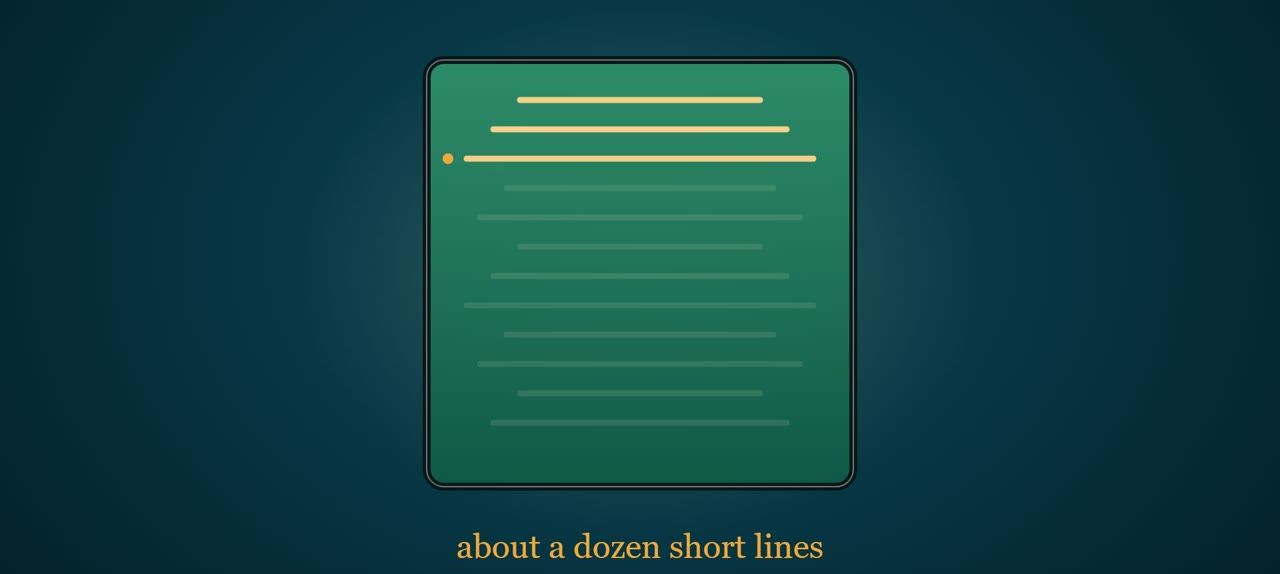
Let me read it to you in plain words. Not word for word. Just the sense. Depending on the version, it has about a dozen short lines. It begins: this is true, without lying, certain. Old texts love to begin with certainty. I always get a little careful when I hear it.
But let us go on. Then: what is below is like what is above, and what is above is like what is below. And through this, the miracle of one thing is done. Then it says that all things come from one, and so all things are born from this one thing, by adaptation. One source, many forms.
Then comes the strange part. The sun is its father. The moon is its mother. The wind carried it in its belly. The earth is its nurse. Now, what is this thing? Honestly, people have disagreed for a thousand years. For many medieval commentators, this was a laboratory text.
The sun was gold. The one thing was the raw matter of the work. Some later readers took the sun and the moon as spirit and soul. And reading the whole tablet as inner work is a more modern idea. I will not pretend to know which one is right. I only want you to see that the text does not explain itself.
The quiet instruction
But there is one line where I think it speaks very clearly. Let me get there. The text says that its power is complete if it is turned into earth. And then it gives an instruction. Newton wrote it like this. With the spelling updated: separate the earth from the fire, the subtle from the gross, sweetly, with great industry. Sweetly. With great industry.
Gently, and with effort. Now look at what other translators did with the same line. The Arabic version found by a scholar named Ruska says: with care and sagacity. A later Latin version says: prudently, with modesty and wisdom. Different words. Same direction.
Not force. Care. To be fair, not every version agrees. An early Arabic version, attributed to Jabir ibn Hayyan, says something almost opposite: feed the earth from what is subtle, with the greatest power. And the twelfth-century Latin puts its word for skill on the next line, the climbing up, not on the separating. I am telling you this because I do not want to sell you a pretty story.
The text is old. It passed through many hands and many languages. It is unclear in places. But in most of the versions I read, the advice is there: do the separating with care, not with force. And that is exactly what this channel is about.
Subtle and gross
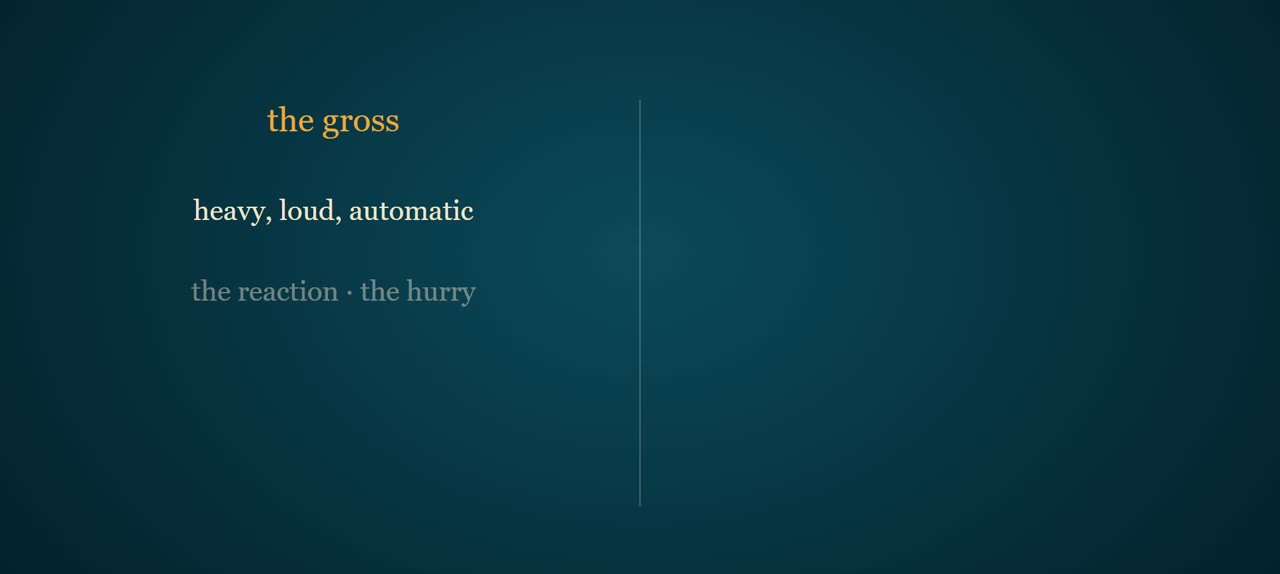
Now, what is subtle and what is gross, for us? I can only give you my own reading, and I will say clearly that it is mine. The gross is what is heavy, loud, automatic in me. The reaction. The habit. The hurry. The subtle is what is quiet. What notices. When I am angry, the anger is the gross.
The part of me that sees the anger is the subtle. And separating them does not mean fighting the anger. If I fight it with force, I only create a second anger, against the first one. The text says: sweetly. With attention. With work, yes. But gently. I live this every day.
In martial arts, all the time. If I try to force something that is right, but at the wrong moment, it fails. It can be the right move, just at the wrong time. And every time I enter without wanting to force anything, things work. It is a matter of adjusting, so that I enter the flow that is already there.
And this is the same lesson as in the first video, about yoga. Before the poses, the yamas. And the first yama is ahimsa. Non-harm. Not harming others. And also not harming yourself. Think about it. A person who tries to awaken in a hurry, who forces every inner thing, is doing violence to himself, in spiritual clothes. That is why this channel is called slow.
The small mirrors the great
One more line, before the exercise. The Arabic version that Ruska found has a line that I did not find in the Latin versions. It says that the structure of the small world is in accordance with the structure of the great world. This is where above and below really lands.
The small mirrors the great. Not as a magic formula. As a way of looking. For me, this principle is almost everything. I am not exaggerating much. I find it in fractals, in small things. When I look closely at something small, I can see the whole. And from the whole, I can work out the small.
It goes in both directions. And it is not only up and down. It is also inside and outside. Here is the part that I think is dangerous, if we do not notice it. We project onto the world a lot of what we carry inside. We see the outside through our own filters. A common case: I feel an inner dissatisfaction, and I fix my attention on some object outside.
Or the opposite: I look at something outside and I think it is about me. Projecting, and taking in. Both happen a lot when we are not aware of it. I am not saying my mind controls what happens outside. I am saying it shapes what I see, what I choose, and how I respond.
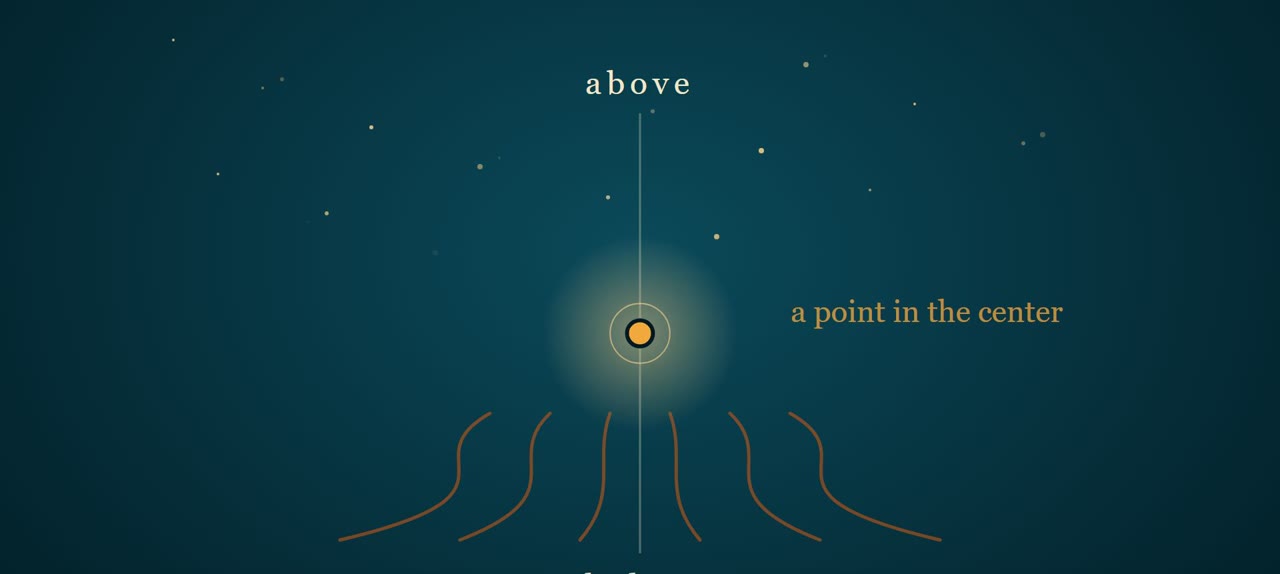
One image stays with me. We are a point, exactly in the center. Above us, one thing. Below us, another. And we are where they meet. I do not say this as a fact. It is an image I use to think. From the center, you can look in both directions.
A last honest note
And what about the Arabic origin? Of course the oldest version we have is Arabic. But that does not mean the idea began there. It could be Egyptian. It could be older than anything we can name. Honestly, nobody knows where it started. This is my opinion, not a fact.
What matters to me is that this kind of understanding shows up everywhere, in many traditions. It is as if Hermes were not one man, but a collective. A message more than a person. Scholars do agree on one thing that fits this: the Hermetic texts were written by many hands, over many years. I cannot explain it well.
But I notice that when we are open and receptive, this idea feels natural to understand. A few lines later, the text promises glory. It says that all obscurity will fly away from you. I want to flag that. Texts like this love big promises. This channel does not make them.
I cannot tell you that reading this tablet will give you anything. What I can tell you is what the text asks, in most versions I read: go gently, and look carefully.
The exercise
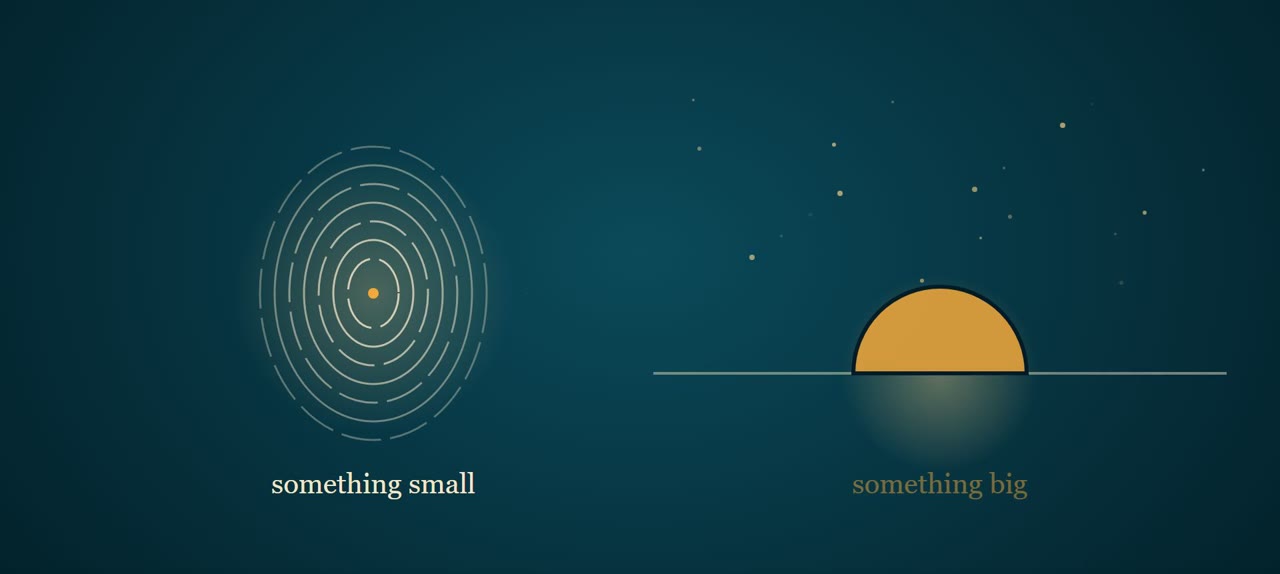
Here is a two-minute exercise. First, look at something small. Your own palm. One minute. The lines, the skin, the tiny details. Look as if you had never seen a hand. Then, look at something big. The sky, or just the horizon from a window. One minute. Now write one sentence.
What do these two have in common? Not what they should have in common. Just one honest sentence. Do not try to make it deep. Remember the text. Sweetly. And if you want to go one step further, ask two questions. If I look up, what can I understand about what is below?
And if I look inside, what can I understand about what is outside? You do not have to answer. Just let the questions stay with you for a while.
In short
Let us put it together. One. The sentence comes from the Emerald Tablet, not from the Corpus Hermeticum. The oldest form we know is Arabic, and the text is unclear in places. Two. The slogan is a short form. The text itself is stranger, and quieter. Three. Its instruction, in most versions I read, is to separate the subtle from the gross sweetly, with care. Not with force. The famous sentence is on tattoos and posters.
The quiet instruction is the one almost nobody quotes: go sweetly.
If you want to go deeper, I made a free short guide to this video, with the tablet in plain words and the exercise. Leave your email with the button below and I will send it to you.
Thank you for reading. See you in the next one.
A free guide
If you like reading about yoga and the older traditions, I go deeper on my YouTube channel, The Slow Initiation. Leave your email, confirm it, and I will send you a free PDF guide, Yoga Starts Before the Poses. After that you will hear about new videos. Nothing else.
I use your email only for this. You get a confirmation email first, and every email has an unsubscribe link. See the privacy policy.